The short answer
Commercial coffee machine finance can mean several different things: a lease, hire purchase or funding for an approved supplier invoice. Supplier payment finance may let an eligible café business repay over up to 12 months. Compare ownership, deposits, total repayments, maintenance and any coffee-purchase commitment before choosing a route.
Specify the whole coffee station
A machine specification should start with the drinks you serve and the busiest realistic service period. Ask the supplier to explain capacity, recovery time, power and water requirements for that workload. More capacity is not automatically valuable if staffing, counter space or customer demand remains the constraint.
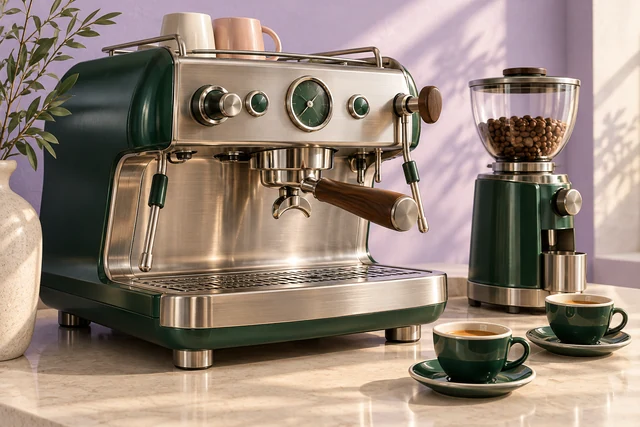
Write down the whole purchase: espresso machine, grinders, water treatment, accessories, delivery, installation and training. Establish whether the quotation includes each item and which costs continue after installation. Ask for a demonstration that reflects your menu and workflow rather than a model name alone.
A coffee shop replacing one failed machine has a different decision from a group standardising equipment across several locations. For a group, record each site, delivery date and machine specification. Decide whether a staged rollout would avoid paying for equipment before a site is ready.
Domestic consumer instalment offers and commercial equipment funding are different markets. This guide concerns purchases by established businesses, not a personal coffee-machine purchase.
Understand what each payment route gives you
| Route | Main question | Details to request |
|---|---|---|
| Buy from cash | How much operating cash remains after the purchase? | Invoice, warranty, delivery and service arrangements. |
| Fund the supplier invoice | Does the repayment schedule fit the business? | Eligible invoice, total charge, security and purchase ownership terms. |
| Lease | What happens when the rental term ends? | Return, extension or other options; maintenance and termination costs. |
| Hire purchase | When and on what terms does ownership transfer? | Deposit, instalments and any final purchase payment. |
The British Business Bank's checklist encourages businesses to consider the desired end-of-contract position when comparing leasing and hire purchase. Use the same discipline for a coffee machine: know whether you want to keep it, replace it or return it, and what each choice costs.
A funded supplier purchase does not itself include a maintenance package. Likewise, a lease quotation should not be assumed to include repairs, consumables or a replacement machine. Have those obligations written into the relevant agreement.
Read any linked coffee supply agreement
If an equipment offer includes coffee purchasing, check the whole package. Ask about the required volume, bean price, contract duration, permitted suppliers and what happens if sales fall short. These terms may matter more than a low headline equipment payment.
For an original illustration, suppose one package requires 40 kilograms of coffee each month at £3 per kilogram more than a like-for-like alternative. The difference is £120 a month, or £1,440 over 12 months. That is not proof either package is better: training, service, quality and other commitments may differ. It simply shows why the bean contract belongs in the comparison.
Compare equal quantities and specifications. Do not treat every kilogram bought as a kilogram sold profitably. Allow for calibration, waste and drinks that are remade. If the supplier proposes a minimum volume, test that obligation against your quieter trading months.
Clarify what happens to the machine if the coffee contract ends, the café changes hands or the site closes. Equipment ownership and supply obligations may sit in separate documents.
A practical twelve-month purchase illustration
Hypothetical figures only
Start with the full invoice.
Assume a machine costs £10,000, a grinder £1,500 and installation £500, all at the final invoiced amounts. The purchase totals £12,000. If an invented finance quotation adds £1,200 in total charges, with no deposit or other fees and twelve equal payments, the total repayable is £13,200, or £1,100 per month.
This is arithmetic, not a current offer or an illustration of a stated monthly interest rate. A real quotation may use another charge structure, term or schedule. VAT treatment, deposits, extra services and a final payment must be handled using the actual documents.
Put the repayments into the café's forecast alongside coffee, milk, food, wages, occupancy costs and existing finance. Assess the cash remaining after all those costs. A machine producing more drinks per hour does not guarantee enough additional customers to meet a new repayment.
Ask how a delayed installation affects the schedule and whether early settlement is possible. Keep cash available for maintenance even when the machine is new.
Check service, water treatment and downtime
Ask who installs and commissions the machine, what training is included and when the warranty begins. Confirm the recommended servicing, water-treatment consumables and local repair arrangements for the model. These are supplier questions to resolve before comparing funding.
If the machine is refurbished, ask for its condition report, work completed and warranty terms. Establish whether the provider accepts the equipment and vendor. A lower purchase price can still be attractive, but it should be compared with realistic repair and support costs.
For an overseas supplier, check the exact model's installation and support arrangements in the UK. Payments in most currencies may be considered, subject to the supplier, destination and payment being supported. Our overseas supplier guide covers currency and delivery questions.
Check the café business fits before enquiring
Hello's service is for established UK limited companies and LLPs with annual revenue of £1 million or more. That may suit an established café operator or qualifying group, while many single-site microbusinesses and sole traders fall outside the stated scope. The provider assesses the borrowing entity and transaction individually.
An approved business can explore funding up to £1 million and repayment terms up to 12 months. Hello's introduction fee is £0; finance charges, security and other conditions are set out in the provider's offer. Review the complete cost before accepting.
Have the supplier quotation, required installation date and company details ready, then enquire about the equipment purchase. If the immediate need is weekly ingredient purchasing rather than equipment, our restaurant supplier guide explains the different cash-cycle questions.
Questions, answered.
Can a coffee shop buy a machine and pay over 12 months?
An eligible established café company can explore supplier payment finance for an approved commercial machine invoice, with terms up to 12 months. Approval, amount and term depend on the provider.
Is leasing cheaper than funding a coffee machine purchase?
There is no universal answer. Compare the same equipment, deposit, total payments, maintenance, end-of-term position and any linked coffee supply commitment. A lower monthly price can reflect a longer obligation.
Can grinders and installation be included?
Present an itemised quotation and ask which lines are eligible. Do not assume a machine approval includes grinders, plumbing, electrical work, training or ongoing service costs.
Does Hello supply or service coffee machines?
No. Hello is a finance introducer. Equipment specification, installation, warranties and servicing remain matters to agree with the supplier and any service provider.
Sources and scope
General background sources, checked 17 October 2026. Examples and planning checklists are our own illustrations.
This guide is general information, not tailored financial advice. Finance availability and terms depend on the provider’s assessment. Consider independent advice before committing.