
The short answer
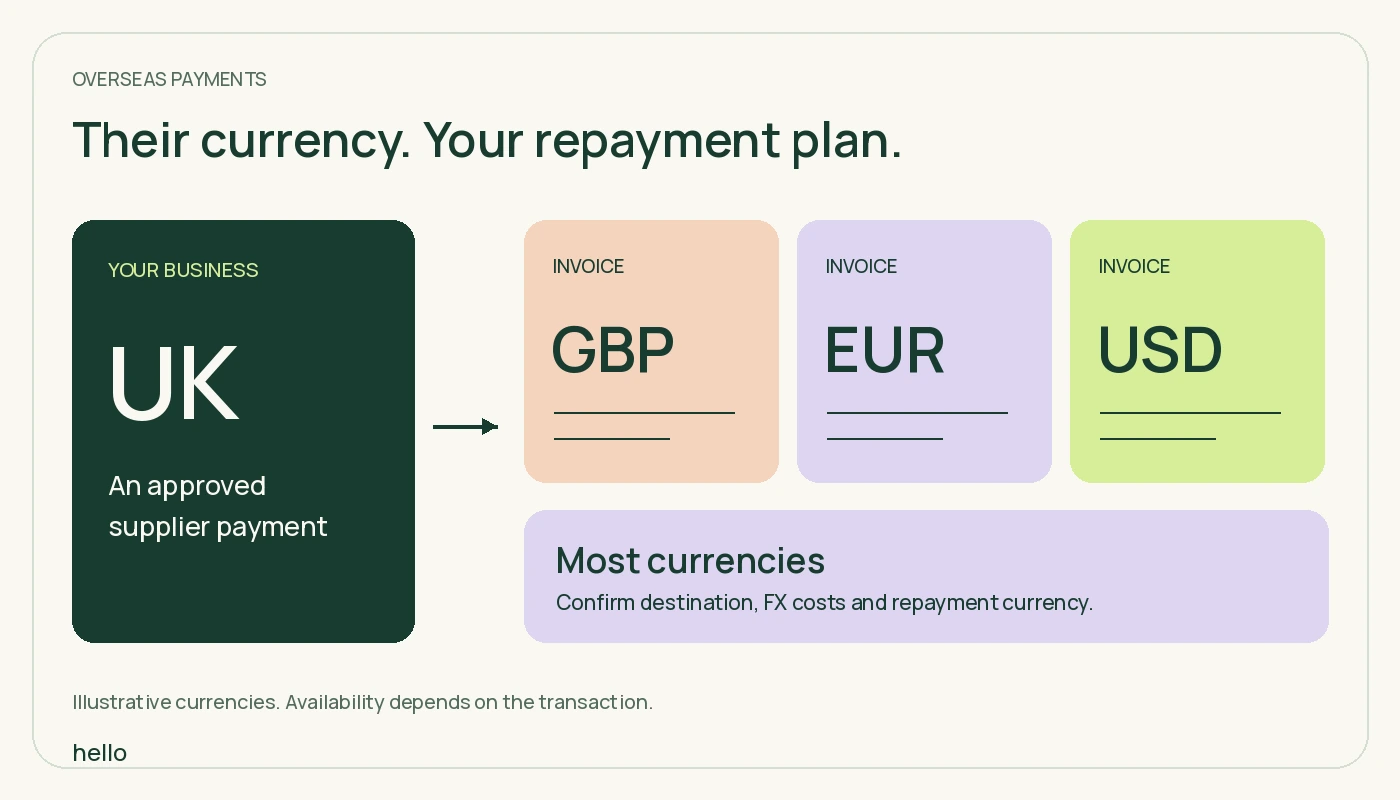
Import finance helps a business bridge the period between paying an overseas supplier and receiving cash from the purchase. Supplier payment finance can fund approved international invoices with repayments over an agreed term. Payments in most currencies can be considered, but the supplier, destination, currency, charges and repayment arrangement must be confirmed for the transaction.
Fund the gap between the supplier and the sale
An overseas order can tie up cash well before a product is ready to sell. The manufacturer may ask for a deposit to start production, a balance before shipment and separate payment for freight. Your customers may then pay weeks after delivery. That sequence creates several funding dates, rather than one simple purchase date.
Import finance is a broad category. Some arrangements fund purchases before or after shipment; some work with documentary trade instruments. Supplier payment finance focuses on an approved outgoing payment and the borrowing business's repayment plan. Ask the provider to explain which structure is actually being proposed.
A confirmed customer order and a forecast retail sale are also different starting points. If a specific customer's order is driving the purchase, our purchase order finance guide explains the extra order-based questions. If you are building general stock, begin with your expected sell-through and cash receipts.
Map the purchase before choosing the term
| Stage | Supplier payment | Cash-flow question |
|---|---|---|
| Order accepted | 30% deposit: €12,000. | Is the deposit eligible, and when must it arrive? |
| Ready to ship | 70% balance: €28,000. | What evidence confirms the goods are ready? |
| Transport and arrival | Separate freight and import costs may arise. | Which costs require your own cash? |
| Sales and collection | Customers pay your business. | Do the receipts arrive before the agreed repayments? |
The deposit and balance add to €40,000. No exchange rate, lending charge or repayment currency is assumed here. A real offer may cover one payment, both payments or neither. Confirm the position before making a non-refundable commitment to the supplier.
Include production and transport delays in the forecast. A shipment arriving late can postpone sales without moving the finance payment dates. A term that looks comfortable against the expected schedule may become tight when customs clearance or customer acceptance takes longer.
Record the point at which ownership and transport responsibilities pass under the purchase contract. Funding the invoice does not by itself resolve delivery disputes, damaged goods or an unfulfilled order.
Pay suppliers in most currencies: what to confirm
Start with the currency printed on the invoice. Then confirm the bank country and account details of the recipient. A supplier based in one country can invoice in another currency, and the available payment route may depend on the combination.
Supplier side
What reaches the vendor?
Confirm the invoiced amount, transfer currency, bank fees and expected arrival date.
Your business
What do you repay?
Confirm the funded amount, repayment currency, total finance cost and payment schedule.
The service can support payments in most currencies, subject to the provider's country, currency and transaction checks. This does not mean every currency pair or destination is supported. Ask about the specific payment rather than relying on a general international-coverage statement.
If conversion is needed, ask when the exchange rate is fixed and how long the quote remains valid. Establish whether the provider adds a separate conversion fee or includes a margin in the rate. Compare the total cost of delivering the required amount to the supplier, not only the advertised transfer charge.
Compare the full cost of the international purchase
The amount on the goods invoice may be only one part of your cash requirement. Build a landed-cost budget covering the supplier payment, transport, insurance where relevant, handling, storage and applicable import charges. GOV.UK's import guidance explains the customs process and the information needed for duty and VAT calculations.
- Purchase cost: the final goods or service invoice, including any deposit already paid.
- Payment cost: transfer charges, conversion costs and any intermediary deductions.
- Finance cost: the complete charge for the agreed funded amount and term.
- Arrival cost: freight, clearance and relevant duties or taxes.
- Delay buffer: cash needed if transport, sales or customer payment takes longer.
Do not assume a facility that funds the supplier's bill also funds customs, tax or every related service. Confirm the eligible payments individually. Customs charges and VAT treatment depend on the goods and circumstances; an accountant or customs specialist can help with the specific position.
Keep your supplier quotation, commercial invoice and shipping records together. They help reconcile what was ordered, what was funded, what reached the supplier and what eventually arrived.
How does supply chain financing work in international trade?
Traditional supply-chain finance commonly enables a supplier to receive earlier payment against an invoice approved by its buyer. It can shorten the supplier's wait for cash while the buyer pays on agreed terms. A business arranging its own funding to pay an overseas vendor is a different starting point.
Other trade structures can involve letters of credit, documentary collections or a buyer loan. They do not all provide the same payment controls or allocate the same responsibilities. Request a plain explanation of who advances money, who receives it, what documents are needed and who repays.
Supplier payment finance should not be described as shipment insurance or a guarantee that goods will arrive. Continue your normal checks on the manufacturer, purchase contract and bank details. Confirm any change of bank account through a trusted channel independent of the new payment instructions.
For the distinction between outgoing bills and customer receivables, see supplier finance versus invoice finance.
What if the overseas vendor sells services?
Not every international vendor sends goods through customs. A design agency, software company, cloud provider or contractor can create the same need to pay an invoice before the work generates cash. Describe these as international service payments rather than automatically treating them as goods-import finance.
The invoice still needs a clear business purpose, recipient, currency and due date. For project work, identify the milestone being paid and how delivery or acceptance is recorded. For subscriptions, distinguish a fixed annual commitment from variable future usage.
Payments for goods and services may face different checks. Our guide to the range of vendor bills covers these use cases in more detail.
Prepare a useful overseas-payment enquiry
Bring the supplier's quotation or invoice, its payment currency, the destination, the amount and the required payment date. Add any deposit already paid, delivery milestones and a forecast of the cash available for repayments. If your invoice is part of a larger purchase, explain the other costs instead of assuming the provider can see them.
Hello focuses on established UK limited companies and LLPs with at least £1 million in annual revenue. Eligible funding can be considered up to £1 million, with terms up to 12 months, subject to the provider's assessment and offer. Hello charges £0 for the introduction; the finance and international payment arrangements have their own terms and costs.
Enquire about your overseas supplier payment. Your initial enquiry starts the process; it does not reserve an exchange rate or authorise a transfer.
Questions, answered.
Can I pay an overseas supplier in its own currency?
Payments in most currencies can be considered. Confirm the exact country, invoice currency, recipient and payment route with the provider. Your repayment currency is a separate part of the finance agreement.
Can finance cover a deposit before goods are manufactured?
Some arrangements can fund approved pre-shipment payments, but not every deposit is eligible. Confirm coverage and the documents required before committing to the purchase.
Are the exchange rate and finance rate the same thing?
No. The exchange rate converts one currency into another. Finance charges relate to borrowing. Transfer fees or exchange margins may also apply, so compare the total transaction cost.
Does the finance include freight, duty and import VAT?
Not automatically. A supplier payment approval does not establish that every related cost is eligible. Ask about each payment and keep any unfunded costs in your cash forecast.
Does funding guarantee that the supplier will deliver?
No. Financing a payment does not guarantee the underlying goods or services. Check the supplier and contract, and understand how disputes affect the finance agreement.
Can I use it to pay an overseas agency or contractor?
Eligible international service invoices may be considered. Explain the business purpose, contract, currency and recipient. Goods-import and service-payment requirements can differ.
Sources and scope
General background sources, checked 17 October 2026. Examples and planning checklists are our own illustrations.
- GOV.UK: importing goods into the UK
- HSBC: buyer loans and international purchase funding
- British Business Bank: supply chain finance
This guide is general information, not tailored financial advice. Finance availability and terms depend on the provider’s assessment. Consider independent advice before committing.