The short answer
Start with the full landed cost, expected sales timing and a slower-sales case. Then compare the resulting cash receipts with every scheduled finance payment. A stock order’s potential margin is only one part of the decision.
Map the stock-to-cash journey
Inventory ties up cash across several stages: ordering, transport, storage, selling and collection. The time from receiving stock to selling it is only part of the cycle if you also sell on credit terms.
- Order and deposit. Record exactly when each supplier payment falls due.
- Delivery and landed costs. Include freight, duties where applicable, storage and other costs needed to make the stock saleable.
- Sell-through. Forecast how much will sell each week or month, with a separate assumption for discounts and returns.
- Cash collection. Use the date money reaches the business, allowing for customer credit terms or settlement delays.
Overlay the finance repayment dates on this timeline. An early repayment can fall before the first meaningful sales receipts, even if the full order eventually sells profitably.
A simple £24,000 stock example
Consider a hypothetical £24,000 purchase producing £36,000 of cash sales over three months. The difference is £12,000 before finance costs, overheads and other expenses. For illustration, assume three equal £8,000 principal repayments and ignore all finance charges.
| Period | Sales receipts | Principal repayment | Receipts less principal |
|---|---|---|---|
| Month 1 | £6,000 | £8,000 | −£2,000 |
| Month 2 | £12,000 | £8,000 | £4,000 |
| Month 3 | £18,000 | £8,000 | £10,000 |
| Total | £36,000 | £24,000 | £12,000 |
The first month still has a £2,000 gap before rent, wages, tax and finance charges. That is why a profitable order can need an opening cash buffer. This example is not a quote, an affordability assessment or a suggested borrowing amount.
Try a slower-sales case before committing
Repeat your forecast with some receipts arriving one month later. Then consider a separate case with lower selling prices or a higher return rate. Do not automatically assume you can extend the loan or draw more funding if the first plan misses its target.
- What is the lowest projected bank balance each week?
- How much of the stock must sell before the first repayment?
- Would a delivery delay also delay sales?
- Which stock would become harder to sell after the season ends?
- What cash reserve remains after tax, wages and existing debt?
- What action would you take if sales ran behind the forecast?
Use actual sell-through history where you have it. Separate a repeat purchase with a clear sales record from a new product whose demand is still uncertain.
Does a bulk-purchase discount justify the finance?
A lower unit price is useful only if the full decision works. Compare the cash saving on the same quantity with the total incremental funding, delivery, storage and handling cost. Consider the value of stock likely to remain unsold or be marked down.
For example, a £1,000 purchase discount does not produce a £1,000 benefit if finance and additional storage together cost £1,200. This arithmetic says nothing about a particular lender’s pricing; it is a way to organise a decision using your own written quotes.
Compare a smaller order, staged deliveries and negotiated supplier terms as well. The right order size and the right finance amount do not have to equal the supplier’s maximum discount tier.
Prepare your funding application
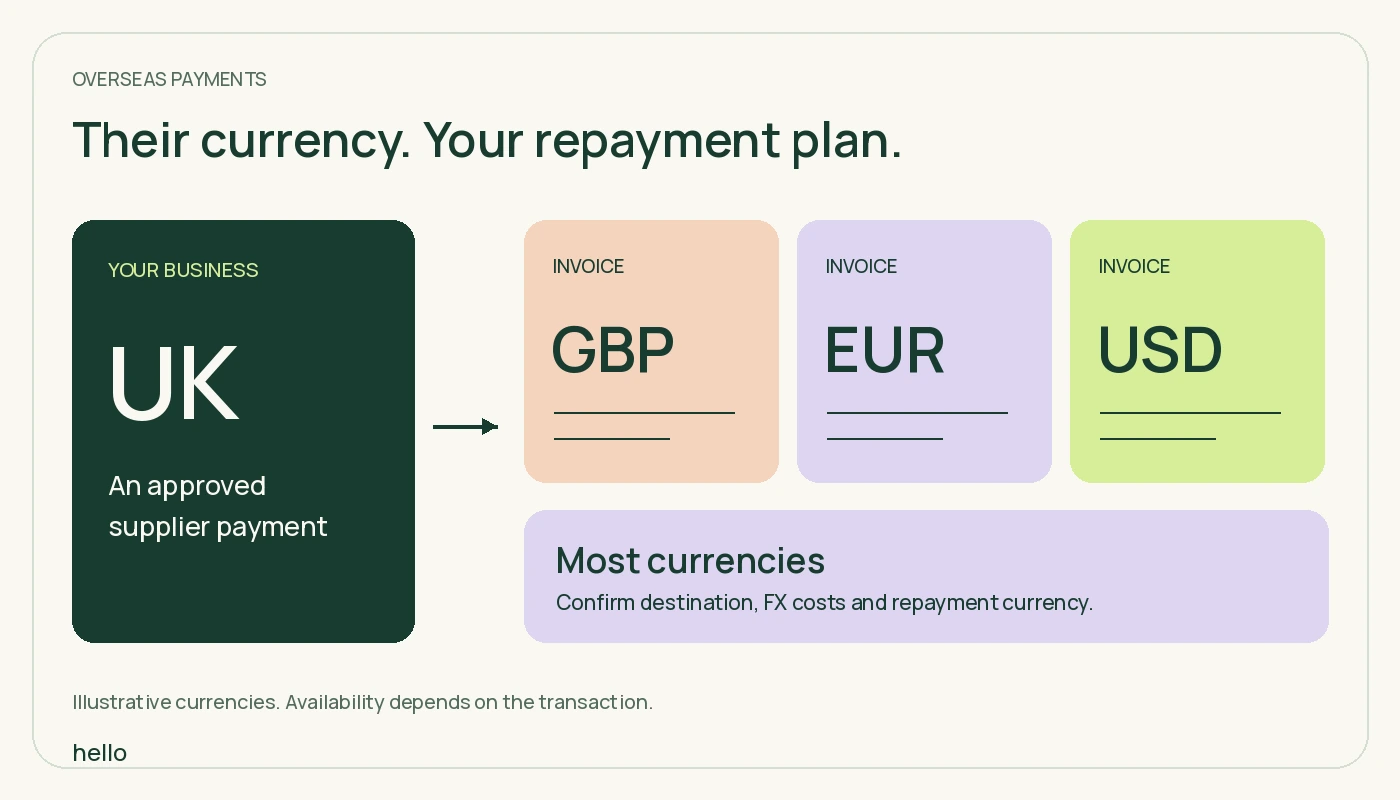
Have the supplier invoice or purchase quote, the delivery schedule, a stock sales forecast and your current commitments ready. Ask whether the proposed facility covers the specific purchase and its related costs. Confirm any currency, supplier or country restrictions before committing to the order.
“Inventory finance” can describe several funding arrangements. An asset-backed stock facility and a facility that pays supplier invoices may have different checks and security. Explain what you are buying and how cash will come back into the business, rather than relying on the product label.
Hello Supplier Finance can help you get started with supplier payment finance for established UK limited companies and LLPs with £1 million or more in annual revenue. The provider assesses the application. Read how supplier payment finance works and the invoice finance comparison before deciding which questions to ask.
Questions, answered.
Can finance cover stock before it has sold?
That is the purpose of some stock and supplier-payment funding arrangements. Eligibility depends on the provider and transaction; availability is not guaranteed.
Should repayments match the sales forecast?
The forecast is a useful way to assess the schedule, but it does not change contractual payment dates. Allow for slower sales and other business costs.
Is this a repayment quotation?
No. The examples deliberately exclude charges and use simplified assumptions. Request the actual fees and repayment schedule from the provider.
Sources and scope
General background sources, checked 16 October 2026. Examples and planning checklists are our own illustrations.
This guide is general information, not tailored financial advice. Finance availability and terms depend on the provider’s assessment. Consider independent advice before committing.